
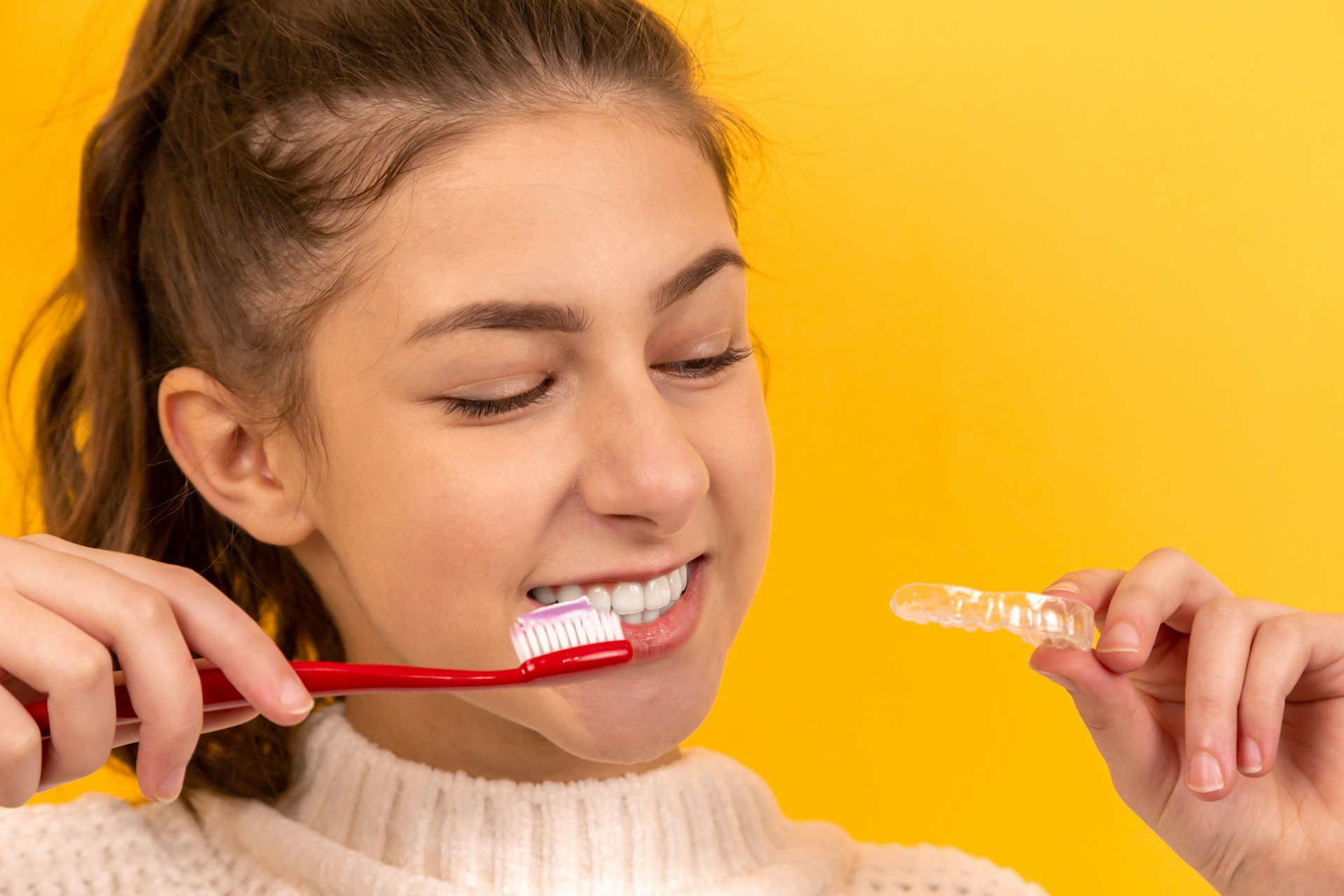
A brighter smile often comes down to small habits repeated every day. Brushing technique, food choices, hydration and regular dental visits all affect how your teeth and gums look and feel. These routines also support fresh breath and help prevent minor concerns from becoming painful problems.
Self-care doesn’t require a complicated collection of products. A few practical changes can protect your enamel, reduce surface stains and make your regular routine more effective.
Give brushing the time it deserves
Brush twice a day for two full minutes, using a soft-bristled toothbrush and fluoride toothpaste. Two minutes can feel surprisingly long, so set a timer or choose an electric toothbrush with a built-in alert. Divide your mouth into four sections and spend about 30 seconds on each one.
Use gentle, circular motions around the gumline. Heavy pressure can irritate your gums and wear down enamel over time. These daily oral health habits also include cleaning between your teeth, where a toothbrush cannot reach effectively. Floss once a day or ask your dental professional about another interdental cleaner if standard floss feels difficult to control.
Be thoughtful about food and drinks
Frequent snacking keeps your teeth exposed to acids throughout the day. Try to leave space between meals so saliva has time to neutralize acids and support the natural repair of enamel. Crunchy produce such as apples, carrots and celery can encourage saliva production, though these foods don’t replace brushing. Incorporating these crisp snacks into your daily routine is one of several helpful teeth whitening tips that keep your teeth looking fresh.
Water is the most tooth-friendly everyday drink. Sipping it after coffee, tea or strongly colored foods helps wash away residue before it settles. Other smile-friendly habits include chewing sugar-free gum after meals when brushing isn’t practical. Look for gum containing xylitol and choose products carrying a recognized dental approval seal.
Protect your smile from everyday stains
Coffee, tea, dark berries and tomato-based sauces can leave pigments on the tooth surface. You don’t need to eliminate foods you enjoy, but rinsing with water afterward can limit how long pigments remain in contact with enamel. Drinking iced coffee or tea through a straw may also reduce direct contact with the front teeth.
Wait about 30 minutes before brushing after acidic foods or drinks. Acid temporarily softens the enamel surface, and immediate brushing may contribute to wear. If maintaining brightness is a priority, follow these tips for keeping your smile bright between professional treatments. Avoid improvised whitening mixtures, which may cause sensitivity or damage enamel.
Don’t overlook sleep and stress
Stress can show up in your mouth through jaw clenching, teeth grinding or changes in your usual routine. You might wake with a sore jaw, experience morning headaches or notice that your teeth feel more sensitive. A relaxing bedtime routine can help, but ongoing symptoms deserve professional attention.
Keep your daytime posture in mind too. When you aren’t eating, your upper and lower teeth should usually remain slightly apart, with your lips relaxed. If you catch yourself clenching during work, place a small reminder near your screen and release the tension. A dentist can check for signs of grinding and discuss suitable protection if wear is already visible.
Make professional care part of the routine
Home care cannot reveal every early cavity, gum concern or damaged filling. Regular appointments allow a dental professional to examine areas you cannot easily see and remove hardened deposits that brushing will not shift. The right appointment schedule depends on your oral health history, current symptoms and risk factors.
Regular appointments allow a dental professional to examine areas you cannot easily see and remove hardened deposits that brushing will not shift. During a dental check up, your dentist can also screen for cavities, gum disease and other concerns using X-rays when appropriate. Contact a dentist sooner if you notice persistent bleeding, swelling, a chipped tooth, ongoing sensitivity or pain. Waiting for a routine appointment may allow a manageable concern to become more complicated.
Keep the routine realistic
A routine only helps when it fits into your actual day. Store floss where you’ll see it, replace a frayed toothbrush and keep a travel-sized oral care kit in your work bag. If evenings are hectic, floss at another consistent time instead of skipping it. The exact hour matters less than doing it regularly.
Pay attention to changes as you care for your smile. A spot that feels rough, gums that bleed in the same place or sensitivity that lasts for several days can provide useful information at your next appointment. Steady daily care, paired with timely professional attention, gives your smile the support it needs without turning oral care into an elaborate project.







Comments are closed.